The Division of Arts and Machine Creativity (AMC) at The Hong Kong University of Science and Technology (HKUST) is delighted to announce its strong presence at ICML 2026, one of the world’s leading conferences in machine learning and artificial intelligence, held in Seoul, South Korea from July 6–11, 2026.
This year, AMC faculty members continue to deliver top-caliber research in AI Alignment and Generative AI, with four papers accepted to ICML 2026. These achievements further reinforce the Division's leadership in generative AI and intelligent systems research.
The Division warmly congratulates Prof. Hongbo FU, Wenhan LUO, Prof. Wei XUE, Prof. Harry YANG, Prof. Yonggang ZHANG, and their collaborators on these outstanding achievements. Their work reflects AMC’s continued commitment to advancing machine creativity and developing transformative generative AI technologies with global impact.
Accepted Research Papers
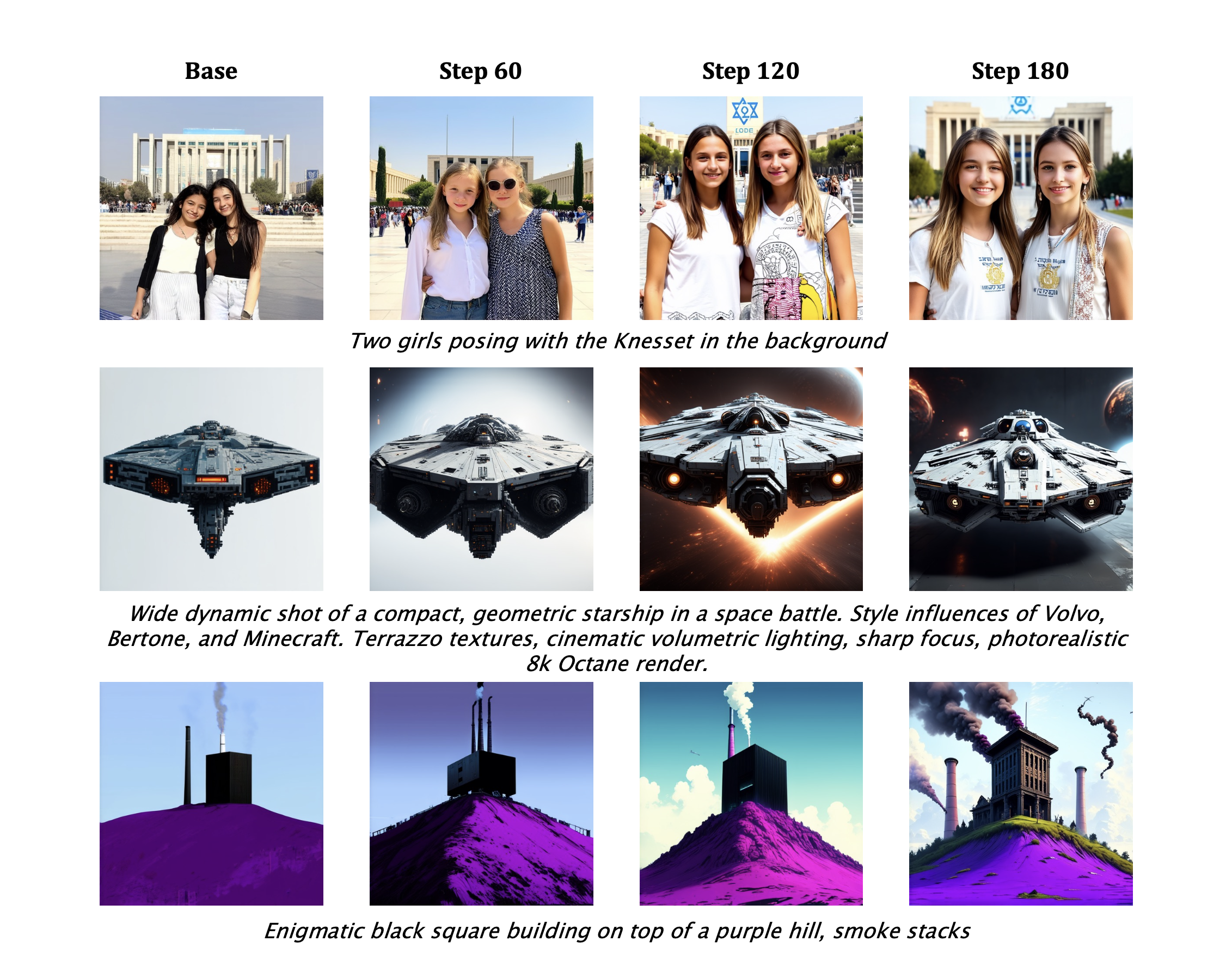
- Beyond VLM-Based Rewards: Diffusion-Native Latent Reward Modeling
Gongye Liu, Bo Yang, Yida Zhi, Zhizhou Zhong, Lei Ke, Didan Deng, Han Gao, Yongxiang Huang, Kaihao Zhang, Hongbo Fu, Wenhan Luo
Introduces DiNa-LRM, a diffusion-native latent reward model for preference optimization in diffusion and flow-matching systems. It addresses the high cost and domain mismatch of VLM-based rewards by learning directly from noisy diffusion states. Using a noise-calibrated Thurstone formulation and a timestep-conditioned reward head, DiNa-LRM offers a more efficient and scalable approach to model alignment while maintaining strong performance on image preference benchmarks. - AlignVid: Taming Visual Dominance via Training-Free Attention Modulation in Text-guided Image-to-Video Generation
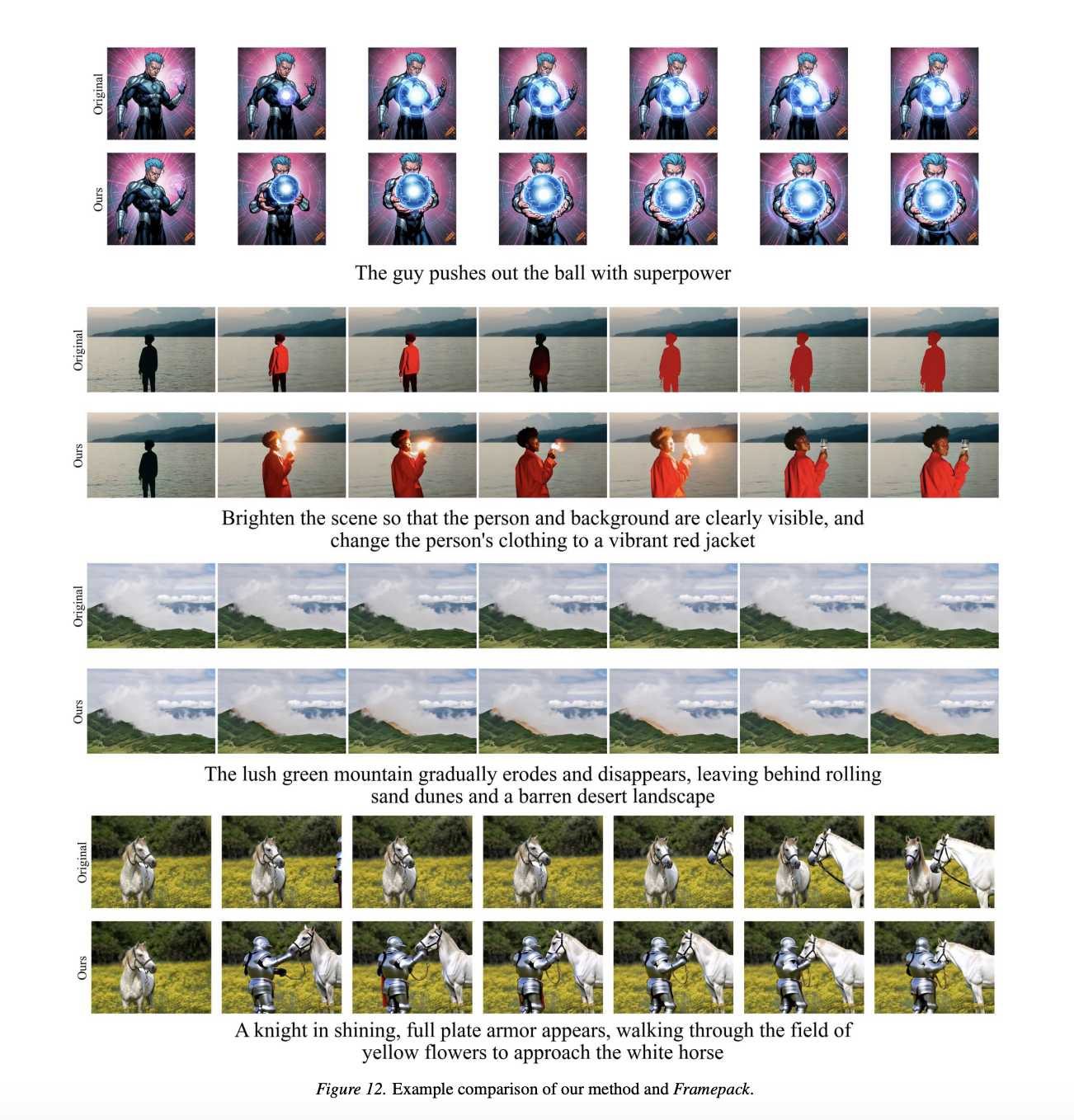
Yexin Liu, Wen-Jie Shu, Zile Huang, Haoze Zheng, Yueze Wang, Manyhuan Zhang, Jinjing Zhu, Ser-Nam Lim, Harry Yang
Presents AlignVid, a training-free method for text-guided image-to-video generation that improves the execution of major edits such as object addition, removal, and modification. By re-calibrating internal attention through Attention Scaling Modulation and Guidance Scheduling, AlignVid reduces visual dominance of reference images and enhances semantic fidelity. The paper also introduces OmitI2V, a benchmark for evaluating prompt adherence in image-to-video generation. - ScalingAR: Scaling Confidence for Autoregressive Image Generation
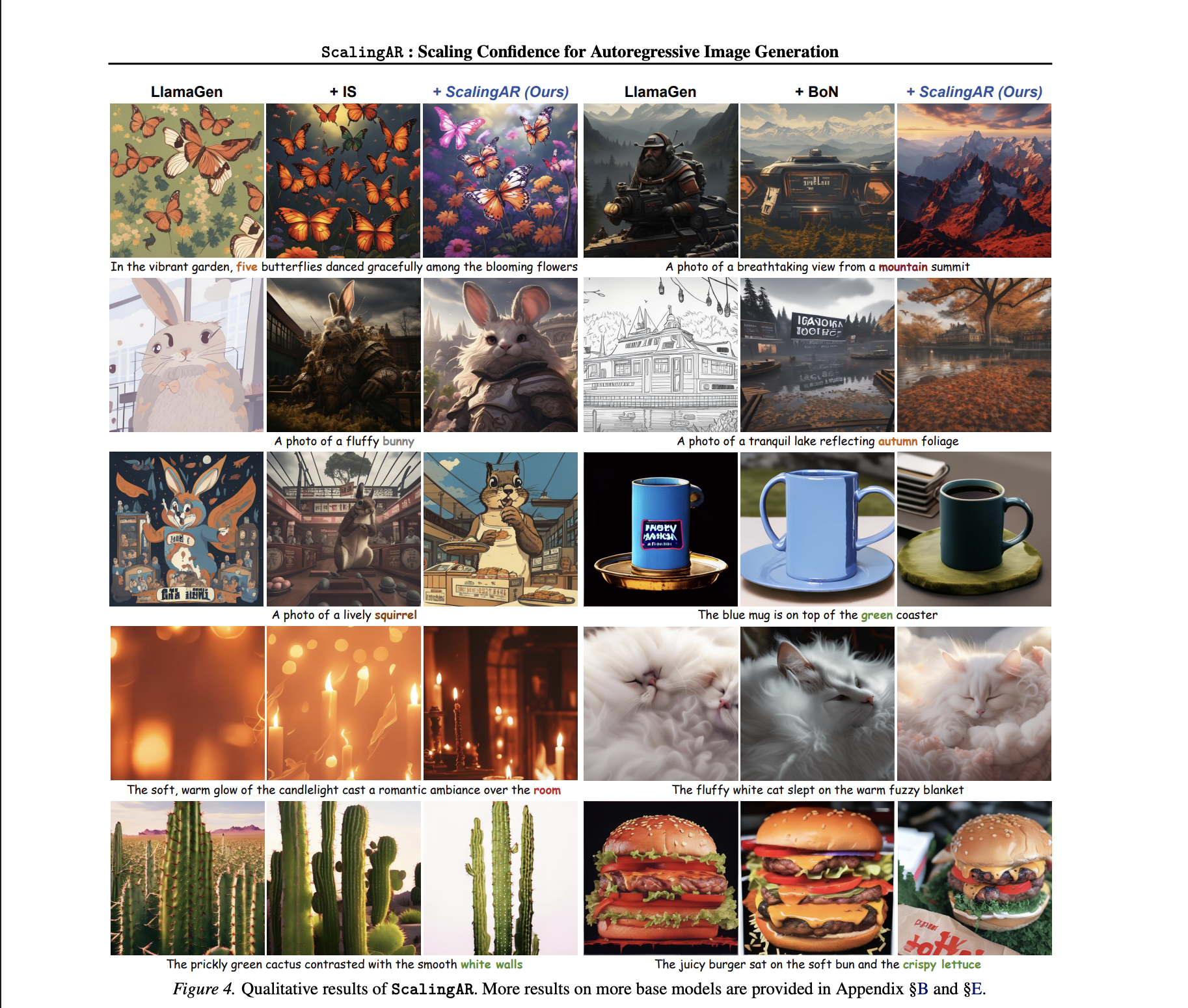
Harold Haodong Chen, Xianfeng Wu, Wen-Jie Shu, Rongjin Guo, Disen Lan, Harry Yang, Ying-Cong Chen
Presents ScalingAR, a test-time scaling framework for next-token prediction autoregressive image generation. It addresses the limitations of existing approaches by using token entropy as a confidence signal, enabling adaptive trajectory pruning and dynamic guidance scheduling without early decoding or auxiliary reward models. The method improves generation quality, efficiency, and robustness across benchmarks, making it a practical test-time scaling solution for autoregressive image generation. - Conditional Equivalence of DPO and RLHF: Implicit Assumption, Failure Modes, and Provable Alignment
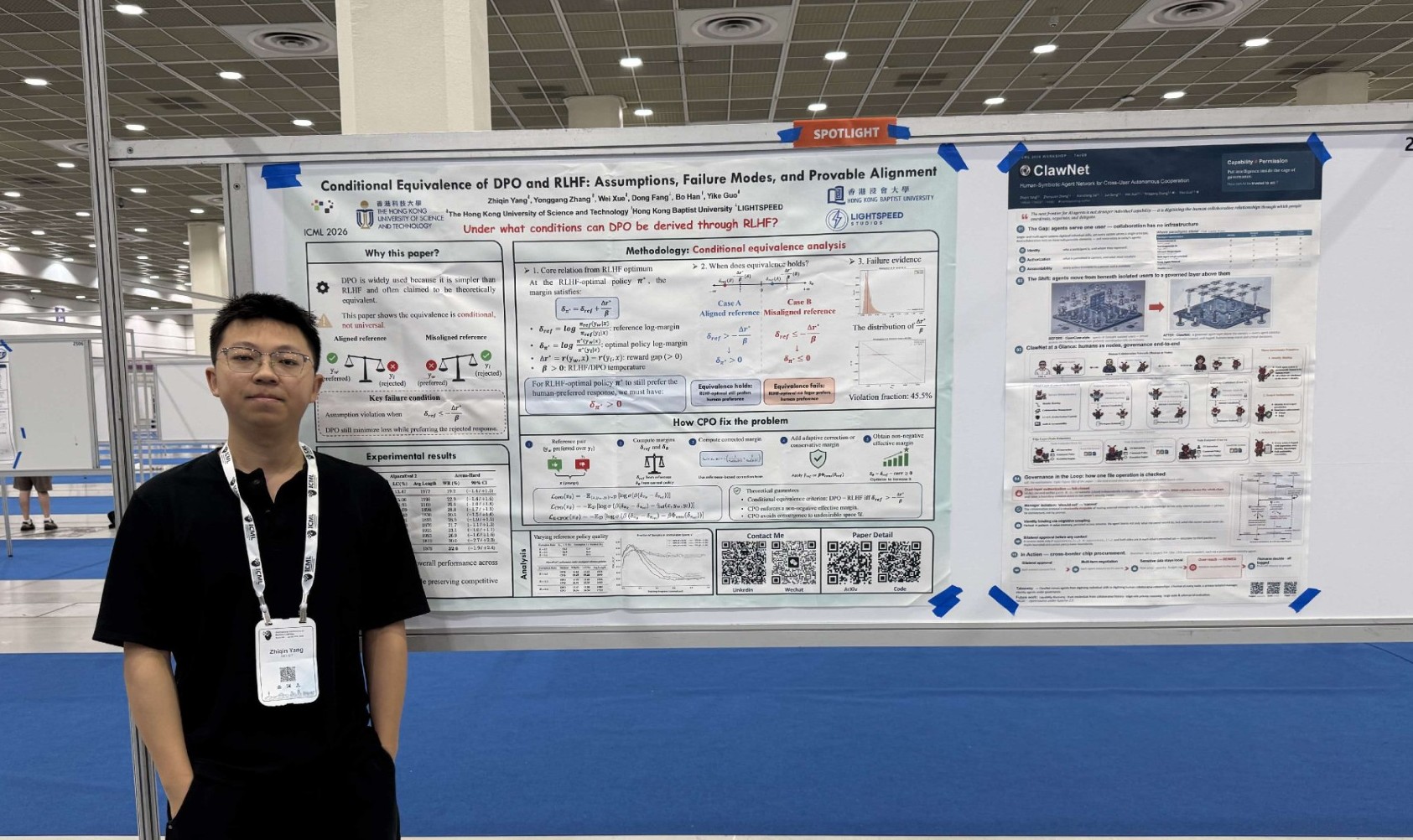
Zhiqin Yang, Yonggang Zhang, Wei Xue, Dong Fang, Bo Han, Yike Guo
Examines the conditional equivalence between Direct Preference Optimization (DPO) and Reinforcement Learning from Human Feedback (RLHF), showing that the two methods diverge when a key preference assumption is violated in practice. It identifies failure cases where DPO may reduce loss while moving toward dispreferred responses, and introduces Constrained Preference Optimization (CPO) to preserve alignment guarantees.