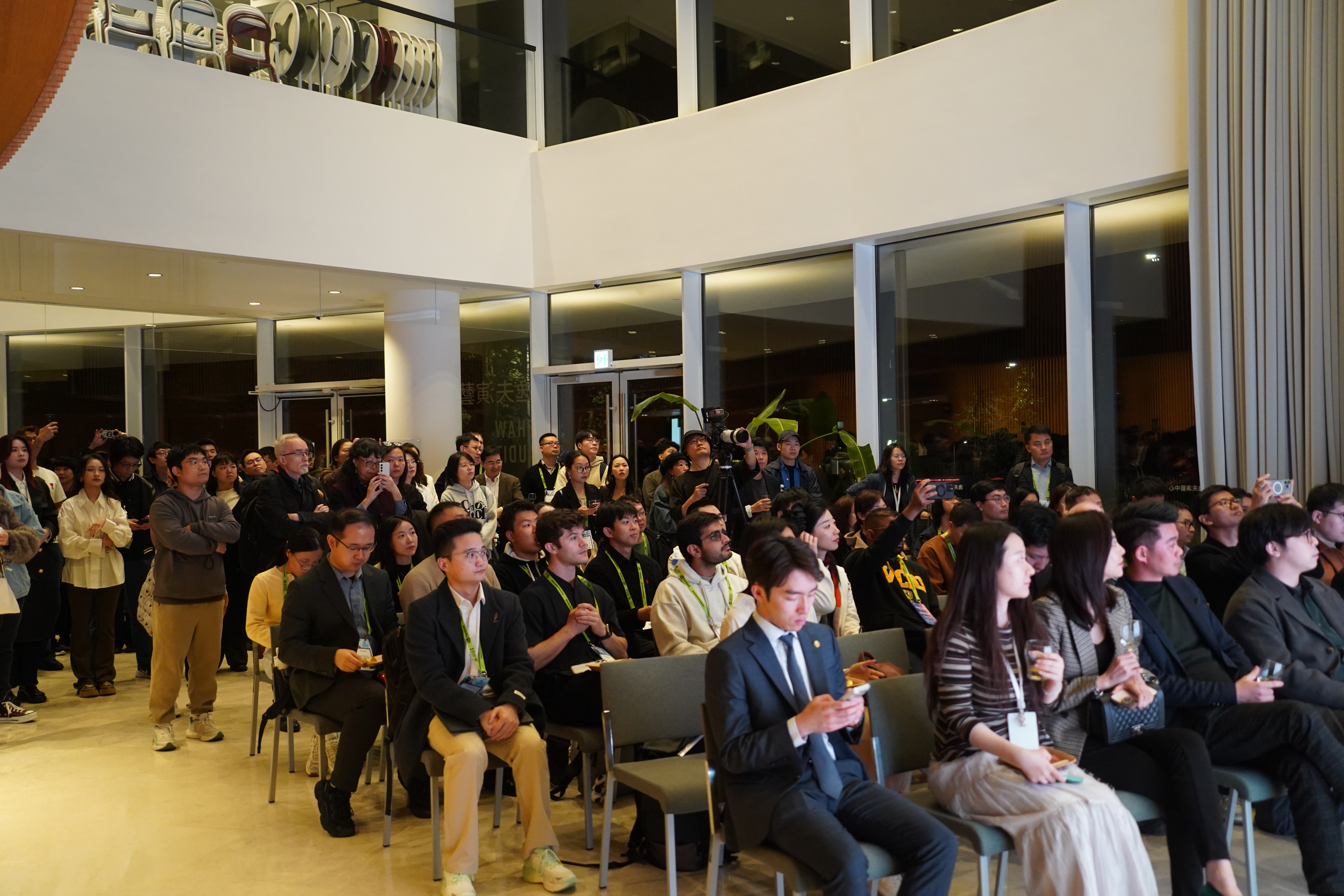
On December 15, 2025, the 2nd Cross-Campus Exhibition, titled “Symbiotic Signals: Entangled Perceptions and Algorithms”, jointly organized by the Division of Arts and Machine Creativity (AMC) at The Hong Kong University of Science and Technology and the Computational Media and Arts Thrust (CMA) at The Hong Kong University of Science and Technology (Guangzhou), was unveiled at the Shaw Auditorium G/F Piano Foyer, HKUST.
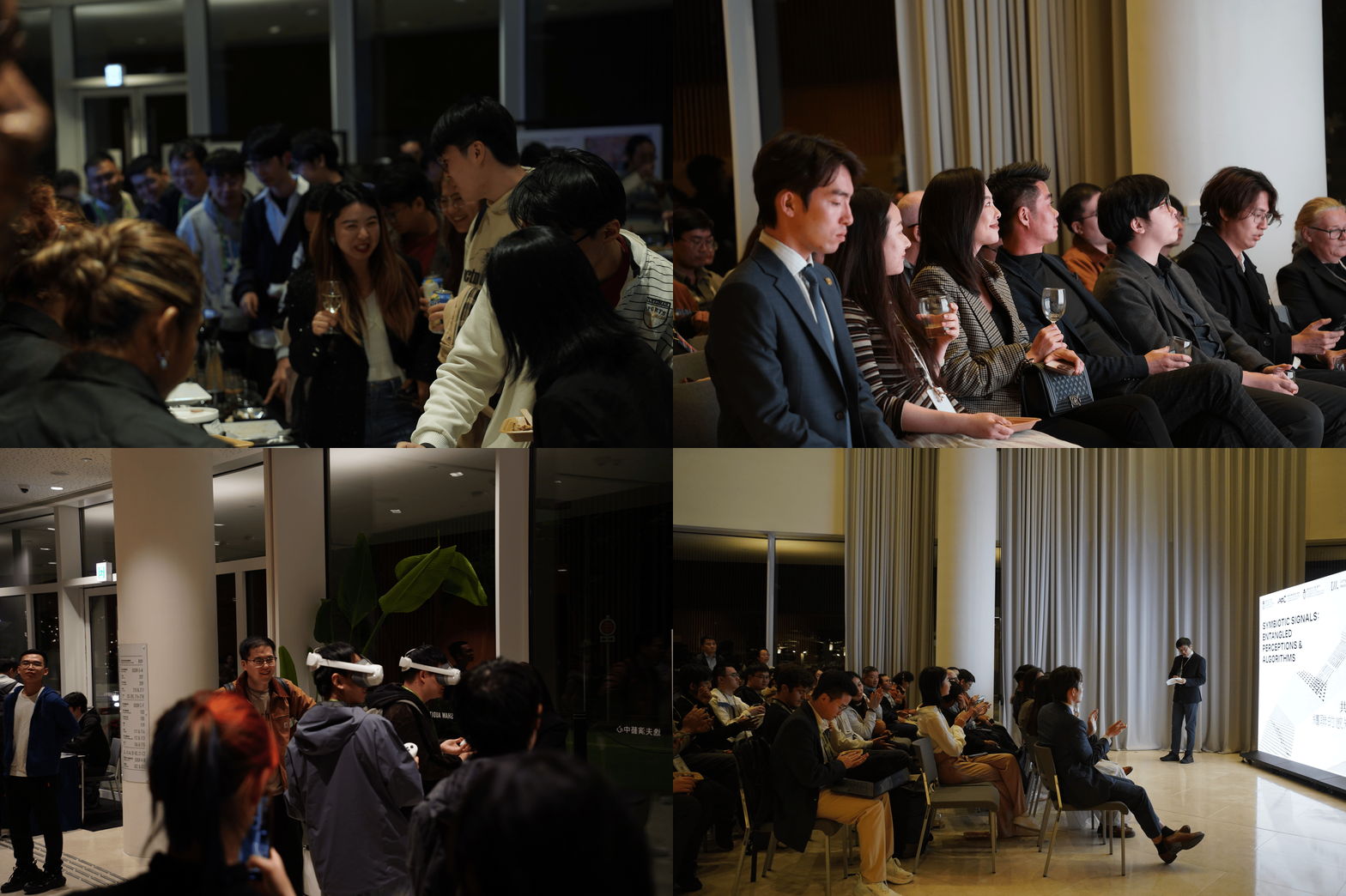
In the afternoon, a panel discussion titled “Working in an Interdisciplinary Department: When Art and Technology Intertwine” was hosted at SIGGRAPH Asia 2025, bringing together industry experts and scholars to explore how artificial intelligence can empower artistic creation and foster the integration and development of future interdisciplinary education. The evening opening ceremony brought together numerous artists, scholars, and guests, witnessing an academic event that deeply integrated art and cutting-edge technology.
Solemn Opening: Mourning and Artistic Resonance
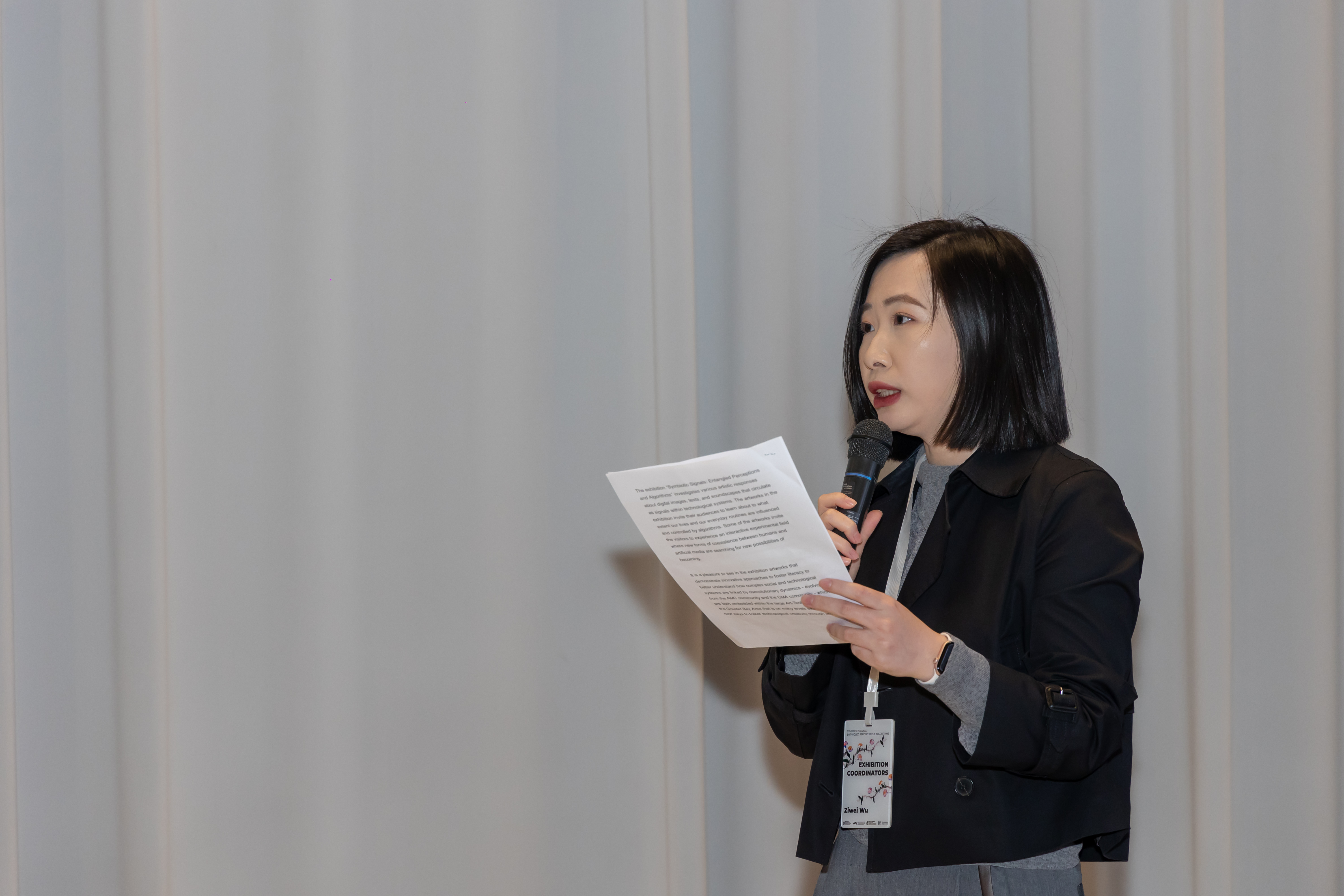
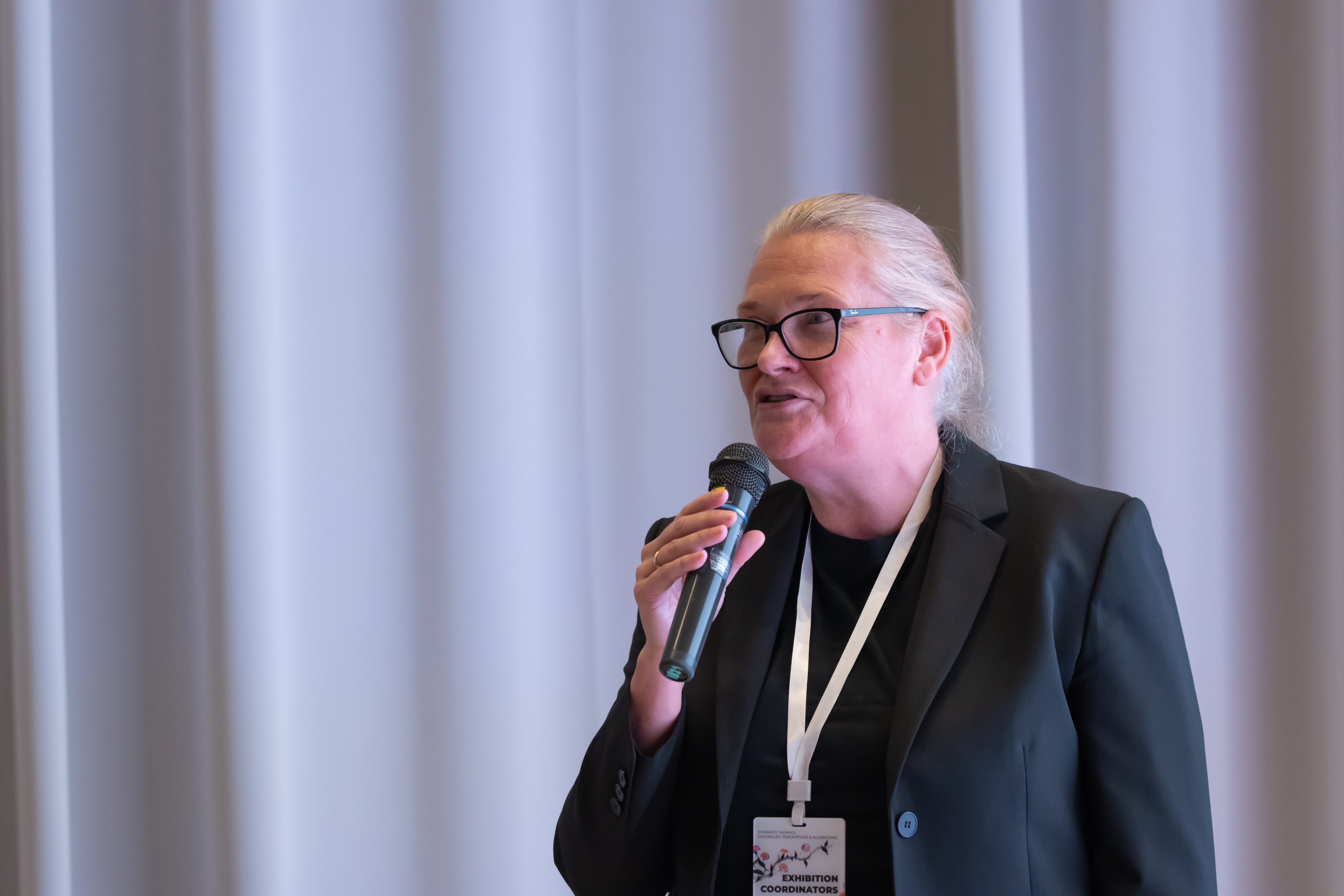
The opening ceremony was hosted by Ms. Ziwei WU, representative of the Curatorial Committee. After a warm welcome to the guests, she solemnly addressed the recent tragedy of the Tai Po fire, asking all attendees to join in a moment of silence for the lost lives. “Our hearts go out to all those affected by this tragedy. We mourn the lives lost and extend our deepest sympathy to their families and those injured.” She added that gathering before art at such times underscores the importance of humanistic care and community spirit. HKUST has established an official fundraising channel for those who wish to contribute in this hard time, with information available at the reception desk.
Organizer’s Remarks: Driving Cross-Disciplinary Collaboration with Scale and Vision
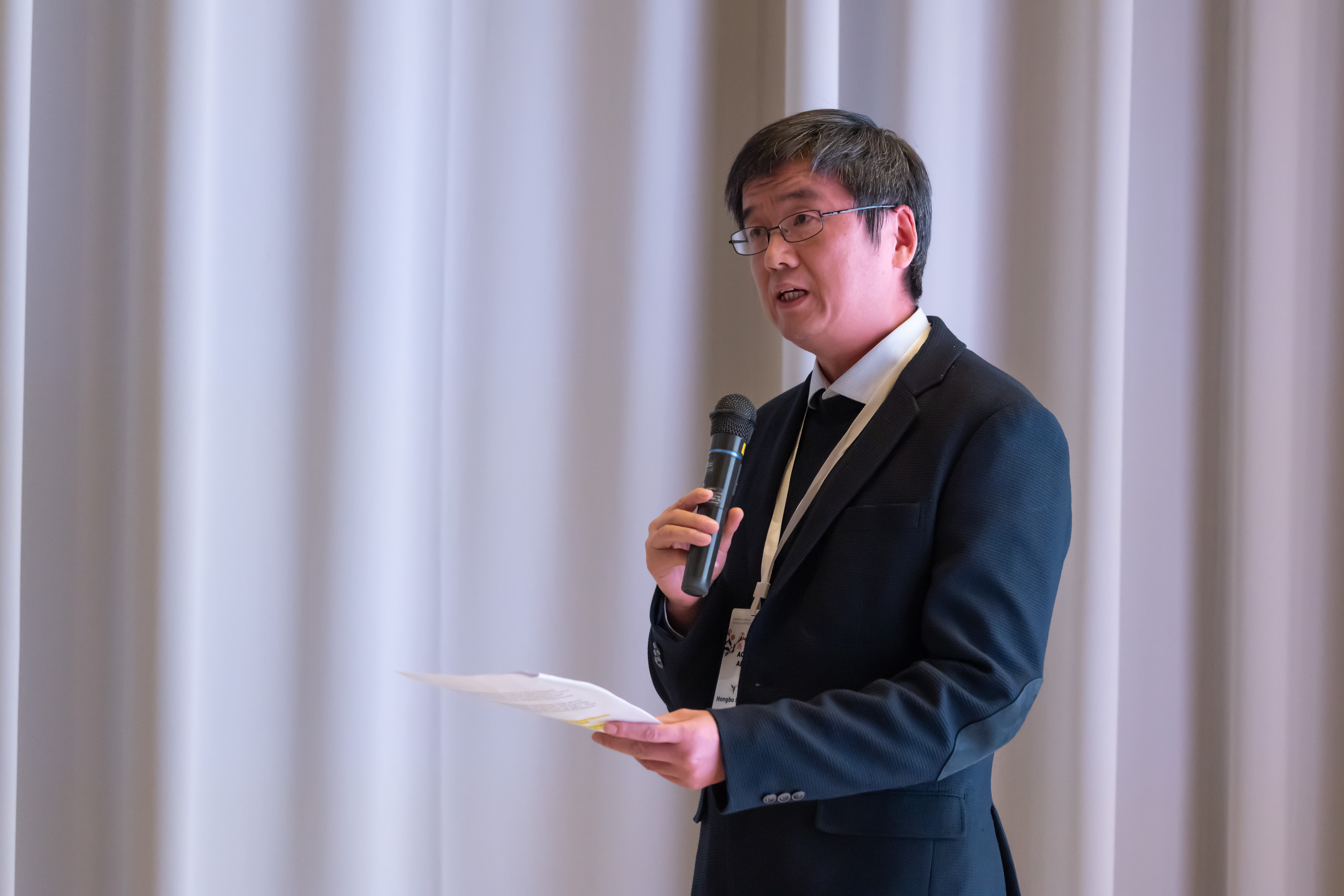
Prof. Hongbo FU, Acting Head of the Division of Arts and Machine Creativity (AMC), highlighted in his opening speech that this exhibition exemplifies AMC's "learning through practice" approach. He noted the efficiency of the curatorial process through student-led Special Interest Groups (SIGs), managing to bring the exhibition to life before an international audience from SIGGRAPH Asia 2025 in a mere one and a half month. The open call for artwork received 36 submissions in total, with 25 cross-media works selected for display, including invited contributions from institutions such as Zhejiang Satellite TV's Digital Human Studio and China Mobile (Zhejiang) Research & Innovation Institute. Prof. Fu expressed gratitude to all partners and emphasized that the exhibition aims not only to present artworks, but also to create an interactive space for the audience, artists and algorithms, reflecting AMC's pragmatic and collaborative spirit in bridging art and technology.
Prof. Ingeborg REICHLE, art historian, curator and Chair of the Exhibition and Events Committee at the Computational Media and Arts Thrust (CMA), proceeded to share the exhibition's making processes and the vitality of the Art-tech ecosystem in the Greater Bay Area. She pointed out that this joint curatorial effort between HKUST and HKUST(GZ) showcases the close collaboration and innovative exploration between the two campuses in the integrated field of art and technology, with the works exhibited vividly reflecting the region's vibrant creative atmosphere.
Embarking on an Exhibition: Guided Tours and Panoramic Experience
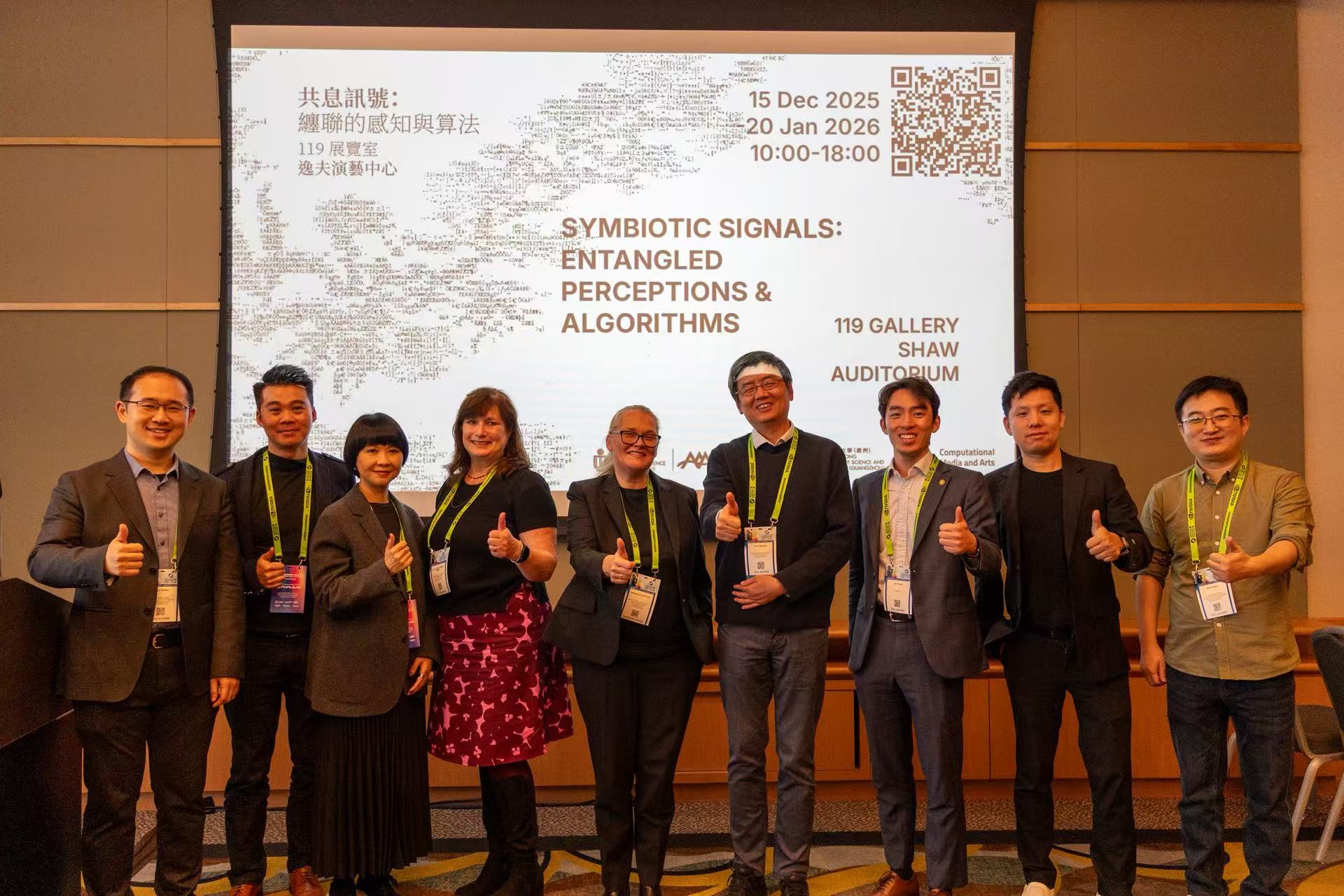
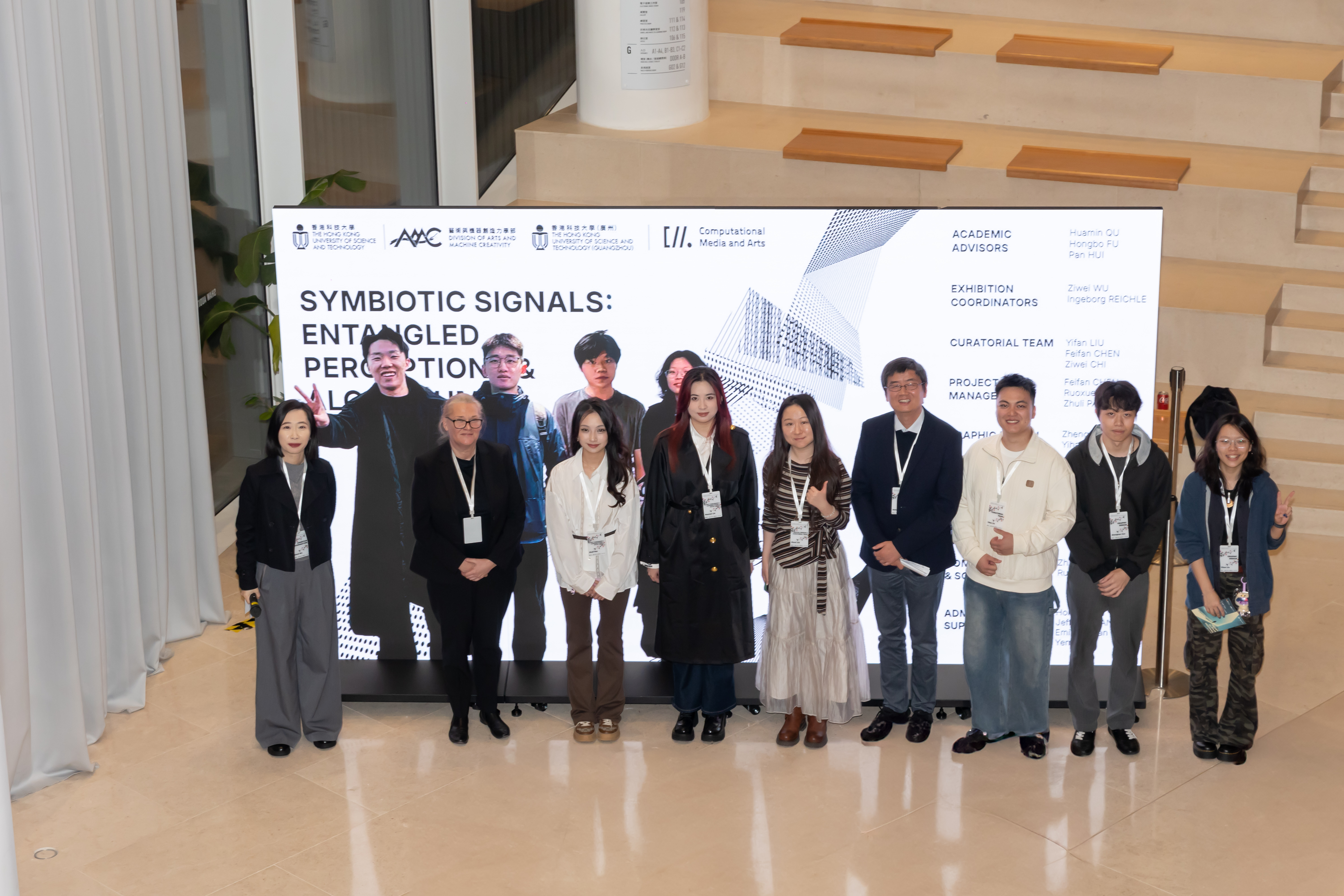
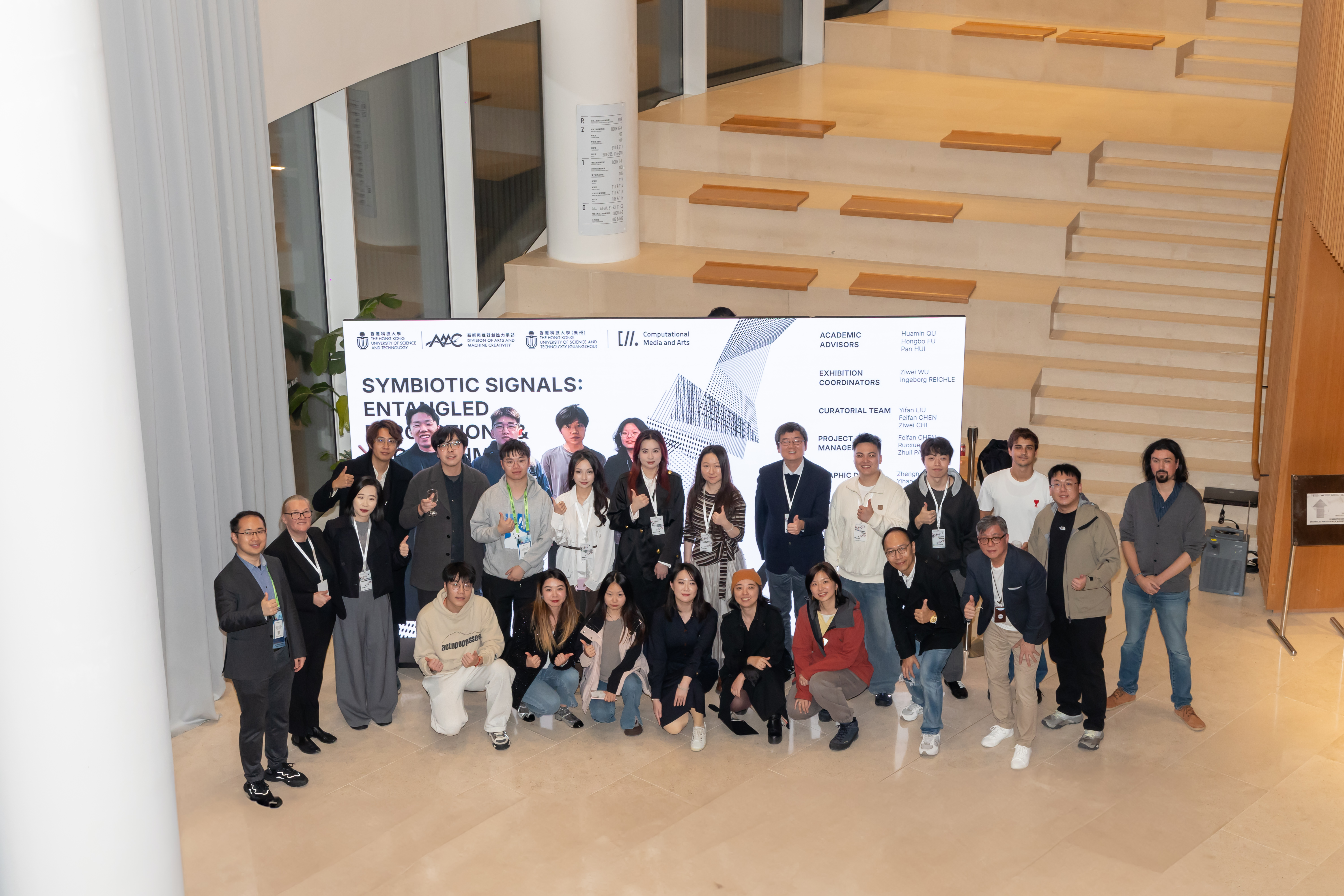
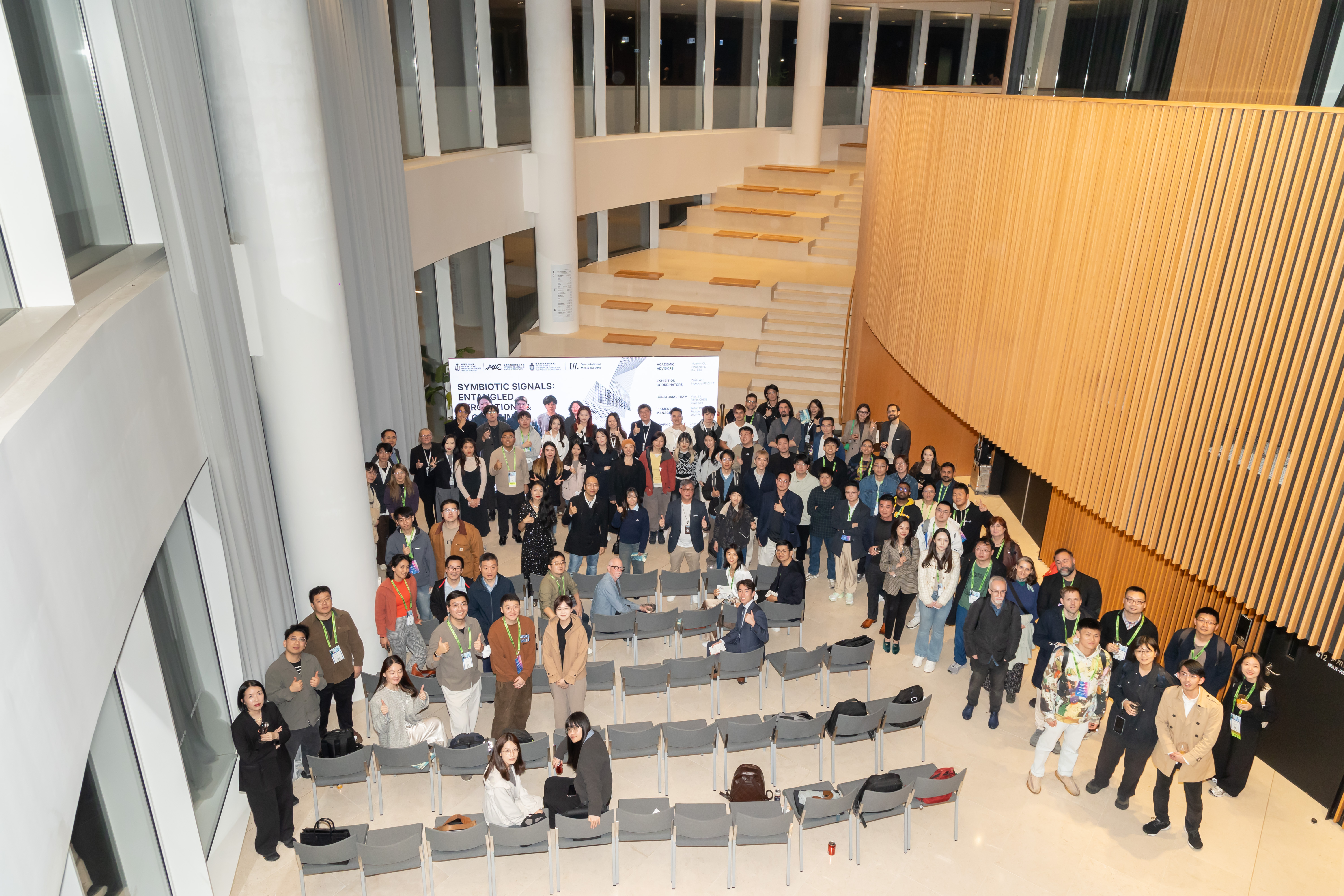
The opening ceremony ended in a harmonious tone with group photo-taking of the working team and all participating artists. The audience was then divided into separate groups, guided by student curators, as they proceeded towards different exhibition zones for an elevated immersive art experience.
Curatorial Guide (Download in PDF)
Panel Zone (G/F) | Signal Atlas: Prologue to the Algorithmic World
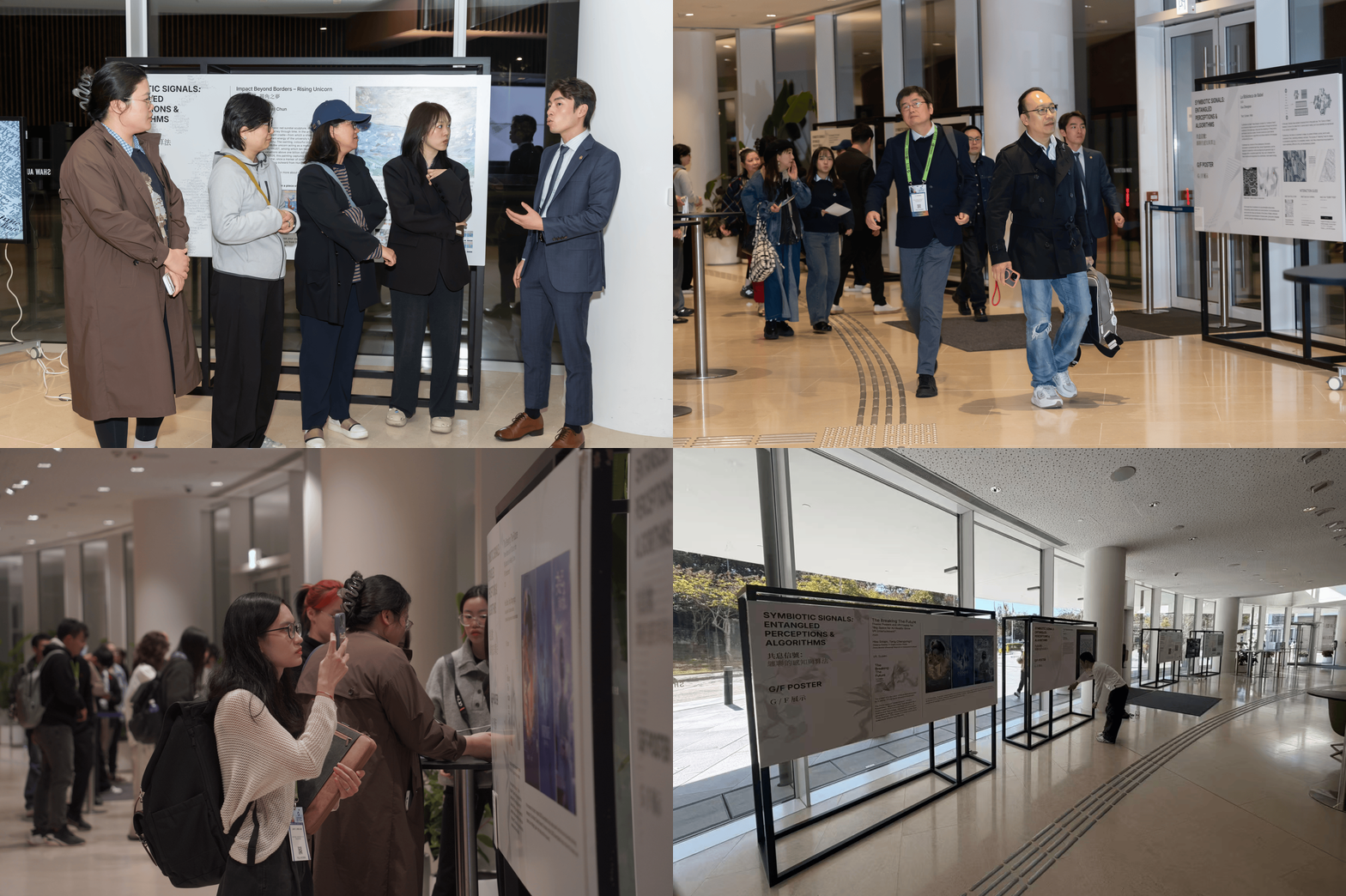
On the curved corridor of the first floor, visitors first encounter a series of posters, slogans, fictional programs, and online text machines. Instead of revealing the internal workings of algorithms, this space presents their public-facing forms: how they are packaged into unicorn narratives, variety show stages, future manifestos, or an endlessly expanding digital library. These surfaces serve as the preface to the exhibition, prompting visitors to reflect on the push notifications, brands, and programs they encounter daily. Here, one realizes that algorithms have already scripted the opening lines of our lives through these flickering interfaces.
Installation Zone (Gallery 119) | Symbiosis Grounds: Reprogramming Bodies, Tasks, and Traditions
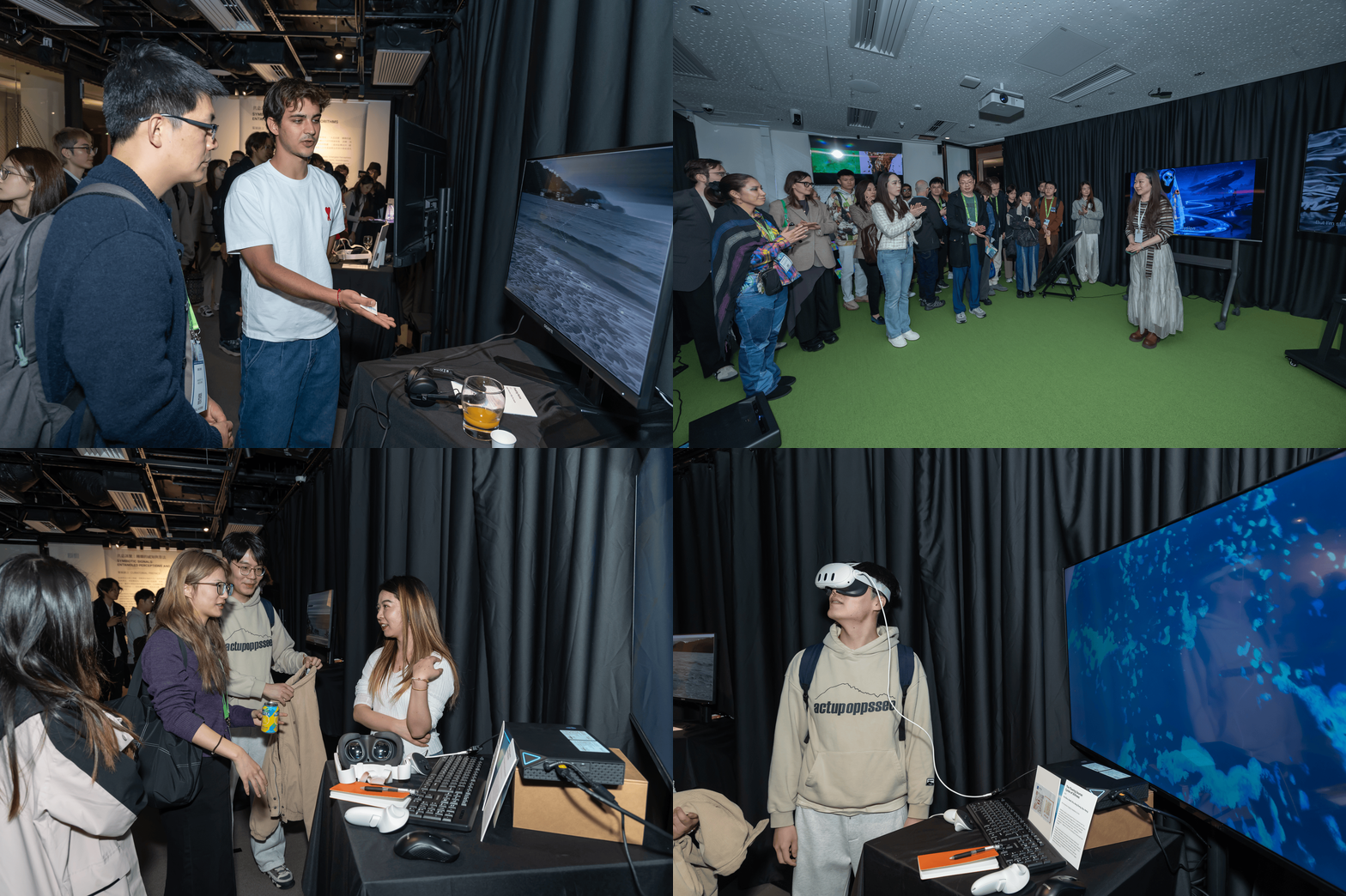
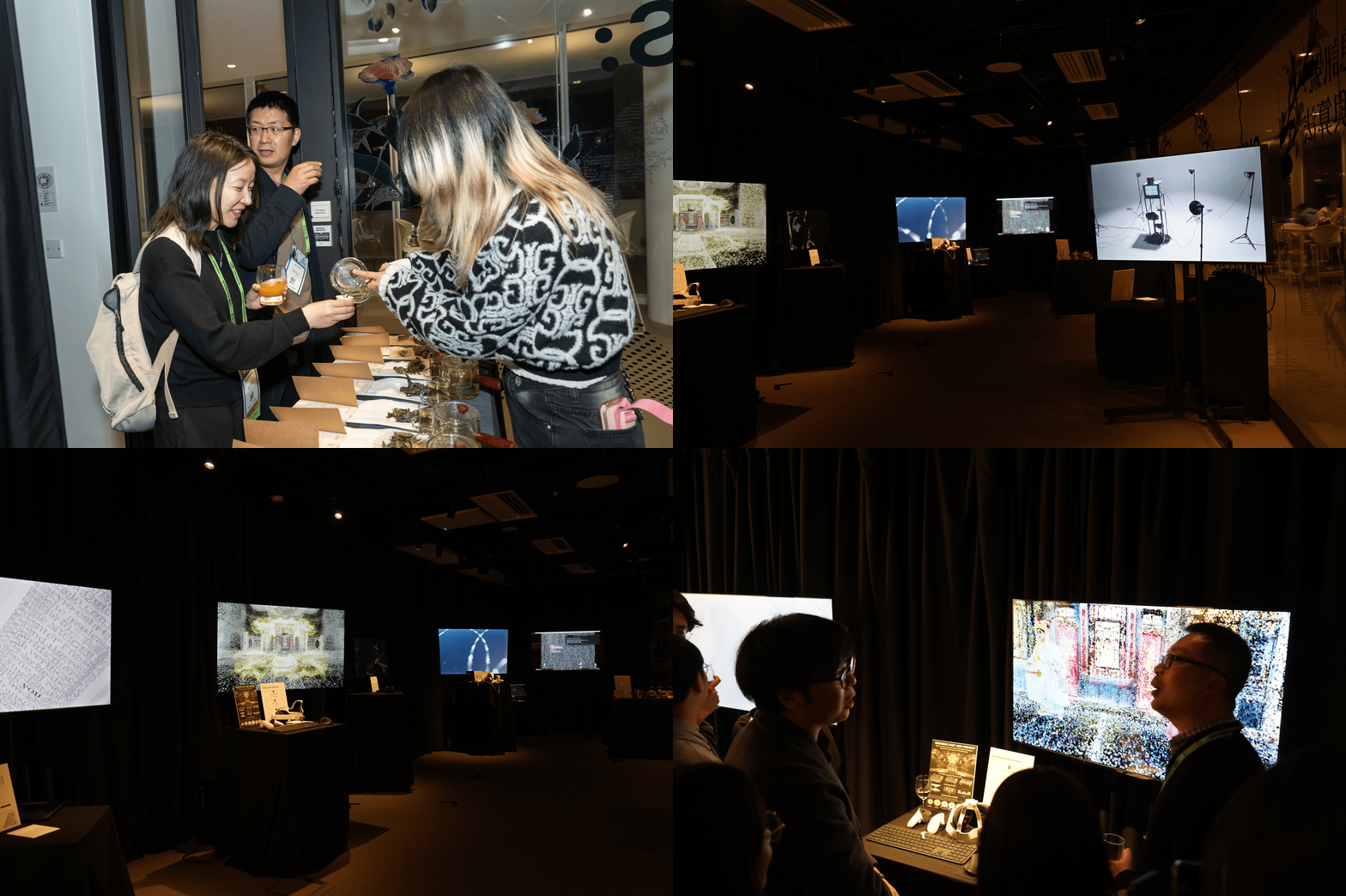
Gallery 119 is the exhibition’s “laboratory” and “server room”: here, visitors taste, listen, wear headsets, and interact with sensors, immersing their bodies into the algorithmic computational process. Eight works explore emotional perception, task-based labor, and local traditions, transforming data from an abstract interface into something re-experienced through the rhythms of the mouth, muscles, and breath. When emotions, behaviors, and cultures are treated as callable resources, this space raises an open question: Can we still coexist with algorithms, rather than merely being driven by them?
Screening Zone (Room 207) | Constellation of Images: Algorithmic Archaeology, Post-Human Perception, and Virtual Consciousness
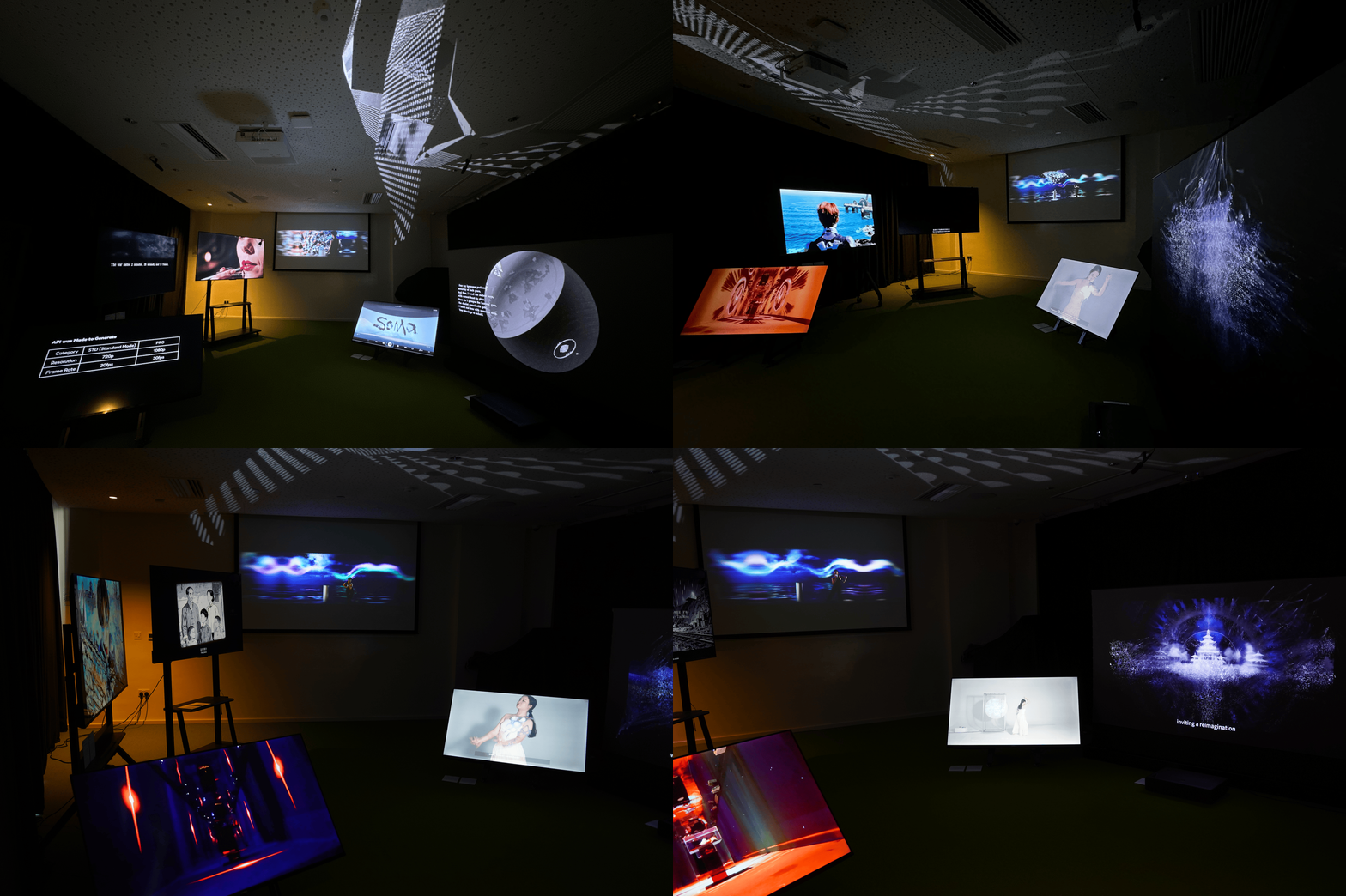
Room 207 is the exhibition’s “theater” and “dreamscape”: moving images drift through the darkened space, with screens scattered like fragments across various planes of the room. Images are grouped associatively, reminiscent of Aby Warburg’s Mnemosyne Atlas—clustered not chronologically or thematically, but through visual and conceptual resonances. Visitors freely explore the relationships between images, sparking associative thinking and evoking historical, psychological, and cultural perceptions. Thirteen film works span themes of ritual culture, biological sensing, and emotional awareness, ranging from ancient reconstructions to future imaginaries, from microscopic organisms to cosmic mappings. Here, time and space intertwine across scales, inviting visitors to join this continuously playing, immersive audiovisual field.
This exhibition does not offer answers, but invites you to step personally into the prologue, body, and dreams of algorithms — technology has written the script, yet your every gaze, each breath, and every fleeting touch will give it interpretations never prewritten.
Perhaps, when we become entangled with algorithms through perception, the real question is no longer “Where will technology take us?” but rather “What kind of existence are we willing to co-create with technology?”
Opening Time
Monday through Friday (except Public Holidays), 10 a.m. to 5:30 p.m.
We look forward to meeting you in this space where signals and perceptions intertwine, and to writing together the yet‑undefined chapters that await.
Artists (in alphabetical order)
| Tristan BRAUD | Ziwei CHI | Daniel CHUN |
| Yikun DI | Kedi DONG | Haoyu DU |
| Xiaomin FAN | Zhengnan GUO | Zirui GUO |
| Shiqin HOU | Yi HU | Jiayang HUANG |
| Pan HUI | Yuyang JIANG | Xiaokang LEI |
| Boyu LI | Hao LI | Yufan LI |
| Siyuan LIU | Yassin POINTNER | Mika SHIRAHAMA |
| Pui Yi TAM | Changyingzi TANG | Yuying TANG |
| Wilson TANG | Duotun WANG | Haoxuan WANG |
| Jue WANG | Zeyu WANG | Zheng WEI |
| Zhen WU | Zirui WU | Harry YANG |
| Jie YANG | Azure ZHANG | Kang ZHANG |
| Linruo ZHANG | Peng ZHOU | You ZHOU |
| Yue ZENG | Xiaolin ZHU | Shuai ZOU |
| China Mobile (Zhejiang) Research & Innovation Institute | ||
| Zhejiang Satellite TV Digital Human Studio | ||
Presented by
Division of Arts and Machine Creativity (AMC), Academy of Interdisciplinary Studies, The Hong Kong University of Science and Technology
Computational Media and Arts Thrust (CMA), Information Hub, The Hong Kong University of Science and Technology (Guangzhou)
Academic Advisors
Huamin QU
Hongbo FU
Pan HUI
Exhibition Coordinators
Ziwei WU, Ingeborg REICHLE
Curatorial Team
Yifan LIU, Feifan CHEN, Ziwei CHI
Project Management
Feifan CHEN, Ruoxue LIN, Zhuli PAN
Graphic Design
Zhengnan GUO, Yihan LIU
Spatial Design
Qiang YU, Ziwei CHI
Video Production
Lingjun MI
Communications & Social Media
Zhuli PAN, Ruoxue LIN
Photography Support
HKUST Media Technology and Publishing Center (MTPC), Yixuan LUO, Yichao XU
Adminsitrative Support
Holly CHAN, Jeffery CHAN, Emily Sihuan LIU, Yeming LI
Venue Partner
HKUST Shaw Auditorium
Production Support
HKUST Media Technology and Publishing Center (MTPC)
Event Promotion Partner
SIGGRAPH Asia 2025
Special Thanks
The Hong Kong University of Science and Technology Library
About the Division of Arts and Machine Creativity (AMC)
Established in 2024 under The Academy of Interdisciplinary Studies (AIS) at The Hong Kong University of Science and Technology (HKUST), the Division of Arts and Machine Creativity (AMC) is Hong Kong’s first academic unit dedicated to integrating Artificial Intelligence (AI) with the arts. AMC’s mission is to foster innovation at the intersection of creativity, AI, and art, shaping future leaders for the art tech ecosystem.
AMC offers three postgraduate programs—MA, MPhil, and PhD—designed to combine artistic practice with advanced research in the division’s focus areas: Machine Creativity, Machine-assisted Art Practice, Critical Studies, and Art Management. Through interdisciplinary teaching and research, AMC aims to redefine creative processes and cultural narratives for the digital age.
AMC has launched a number of signature events to showcase art tech innovation thus far, including the Cross Campus Art Tech Exhibition and the HKUST AI Film Festival, both of which debuted in 2024–25 and are now preparing for their second editions.
About the Computational Media and Arts (CMA) Thrust
The Computational Media and Arts (CMA) Thrust is one of four Thrusts within the Information Hub. It explores the intersection of technology and art, using emerging tools to drive innovation in artistic creation and visual communication.
Its focus areas include various forms of computational art, such as augmented and virtual reality art, AI art, robotic art, sonic arts, and games, as well as design, data visualization, human-computer interaction, computer graphics, and film.
The CMA Thrust is dedicated to integrating advanced technologies with artistic practice, emphasizing emotional engagement and meaningful visual storytelling. Its goal is to create artworks and designs that not only push creative boundaries but also make a lasting social impact.
The Computational Media and Arts Thrust accepts applications year-round and welcomes prospective students from diverse disciplinary backgrounds or those interested in pursuing interdisciplinary research in a global academic environment.